Column · @hectorvvfv834
ADA Accessible Portable Washroom Rental: Secret Conformity Essential
Renting an ada available mobile restroom audios uncomplicated till you are the individual responsible for getting it right. That may be a website manager planning a public occasion, a property owner handling overflow crowds, or a procedures lead attempting to make sure guests are not left navigating obstacles that ought to never ever have actually existed to begin with. In method, availability is not a cosmetic upgrade. It becomes part of fundamental accessibility, standard self-respect, and fundamental legal compliance.
The federal beginning point in the United States is the 2010 ADA Requirements for Accessible Design. Those standards, as interpreted by the Division of Justice and the Access Board, form what counts as compliant when portable restroom systems are provided for public use. That issues because lots of people still presume that renting out one larger mobile unit instantly fixes the problem. It does not. Dimension alone is not the examination. Positioning, path, access, maneuvering room, and fixture clearances all matter.
I have actually seen this misinterpreted in ways that appear small on paper however are a genuine trouble on the ground. A supplier might deliver an ada mobile restroom and position it at the far side of a grassy area that transforms sloppy after one rain. An event may get a compliant system but fail to offer a course a wheelchair individual can actually take a trip. A construction-adjacent public occasion might blend team presumptions from jobsite practices with public-facing policies. None of that aids the individual who gets here anticipating accessibility and locates an obstacle instead.
The very first conformity question is simple: who is utilizing the units?
For general public rentals, the ADA access rules are quite in play. If you are leasing portable commodes for an event, a temporary celebration, or an additional establishing where the public will utilize them, access is not optional. The criteria need obtainable devices and the technological information that make those systems usable.
There is one slim difference worth understanding because it causes complication. The ADA criteria have dealt with portable commode devices on building and construction sites differently when they are used solely by construction workers. That is not the exact same point as a mobile restroom financial institution offering event participants, clients, renters, site visitors, or combined individuals. The moment people start applying a construction-only exemption to a general rental situation, blunders comply with quickly.
That difference matters due to the fact that people commonly make use of the expression ada certified portable toilets freely, as if it explains any kind of larger trailer-style or single-user device. It does not. The genuine question is whether the rental scenario drops under the public-facing ease of access requirements, and whether the unit and its installment meet those requirements.
How many easily accessible devices are required
One of the clearest policies is likewise among one of the most typically missed out on. When you have a collection of mobile single-user bathroom units, at least 5 percent of the devices in that collection should be accessible. The Gain access to Board has actually explained that this applies even at short-lived events.
That 5 percent regulation catches organizers off-guard due to the fact that temporary arrangements tend to be dealt with as less official. A one-day concert, a weekend event, a seasonal fair, or a pop-up community event might feel improvised, however the accessibility assumption does not vanish since the event is short. Temporary does not mean exempt.
If you are taking care of amounts, this is among the first estimations to make, not one of the last. Waiting until distribution day to ask whether an ada portable commode rental is consisted of is just how companies wind up rushing. From a procedures point ofview, it is much less complicated to cook ease of access into the rental order from the beginning than to try to fix it after units are currently staged.
What makes an accessible mobile device greater than simply "the larger one"
People commonly identify an ada compliant mobile toilet by appearance before they understand the lawful and sensible attributes that matter. Yes, obtainable systems are often larger. That extra area exists for a reason. The standards need technological attributes connected to actual use, not just a bigger shell.
The vital issues consist of transforming room inside the device, door steering clearances, component clearances, and the relevant water-closet and grab-bar rules. Those phrases can sound completely dry up until you visualize the individual experience. Somebody using a wheelchair requires area not just to go into however also to place, transform, and use the fixture safely. Someone that needs grab bars counts on them being put in accordance with the appropriate requirements, not anywhere a supplier believed looked affordable. Someone with minimal movement might need door maneuvering room that a confined placement outside the unit can destroy.
This is why the expression ada-compliant mobile toilet need to be treated thoroughly. It is a useful shorthand, but it just suggests something if the system actually satisfies the applicable technical demands and is installed in a way that protects access.
The course to the toilet belongs to compliance
A portable bathroom can be accessible theoretically and unattainable actually. The route is typically where that gap opens up up.
The Access Board advice is clear that portable available devices must have an available course and entryway. If ramps or landings are needed, those also need to comply with ADA technological demands. That suggests accessibility can not quit at the parking area, the walkway edge, or the event gate. The course all the way to the system matters.
This is where real-world judgment is available in. On a hard, level led surface area, creating an obtainable route may be reasonably uncomplicated. On irregular ground, sloped surface, soft lawn, or a temporary event impact that changes throughout the day, preserving that route can be much harder. A route that operates at 8 a.m. Can come to be rutted or obstructed by midday if solution automobiles, secure fencing, cable televisions, or crowd-control devices creep into the path.
I have seen coordinators really think they were certified because they leased the best ada handicap easily accessible portable restroom, just to undermine that initiative by locating it behind barriers or at the end of an improvised crushed rock course. That kind of arrangement might look acceptable from 10 feet away, however it stops working the individual that actually requires to use it.
Identification is not a small detail
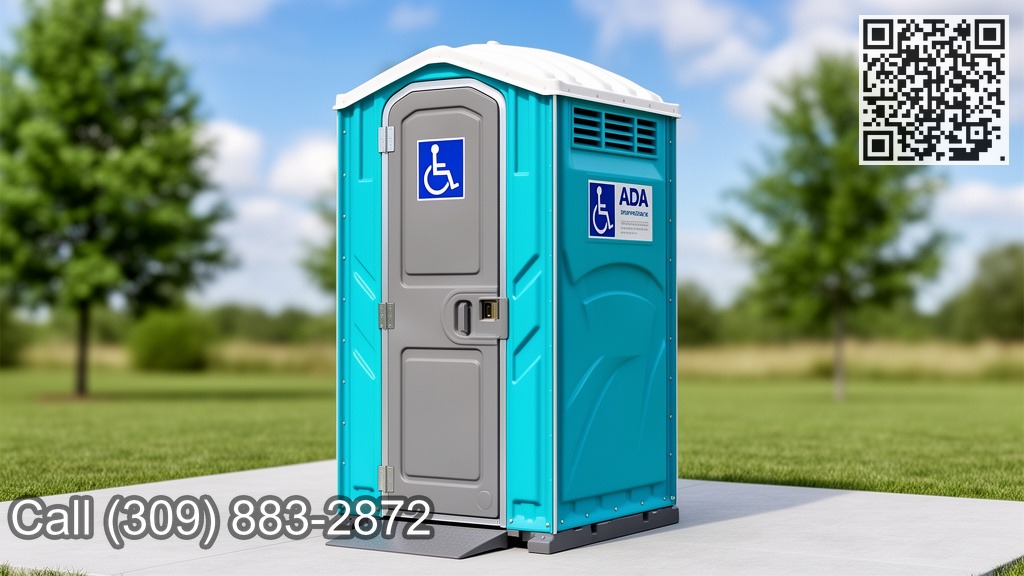
Accessible portable commode systems must be identified with the International Symbol of Access. This demand matters for practical factors as much as lawful ones.
When people are scanning a row of units in a crowded, noisy setup, identification helps them discover the available choice without having to examine every door. It likewise signals that the unit is intended to serve customers that need those features, rather than forcing people right into uncomfortable conversations with personnel or security regarding where they are expected to go.
That said, signage alone does not fix poor planning. An ada certified obtainable portable restrooms order can still produce obstacles if the symbol is present however the route is not, or if the unit is technically easily accessible however separated in a way that makes it harder to get to than the typical devices. Recognition is essential, but it is not the whole job.
https://blogfreely.net/ceolanisxh/ada-mobile-toilet-demands-and-access-recognition-clarifiedWhy placement decisions make or break compliance
Placement is where certified rentals usually succeed or fail. The ADA framework does not just care about the interior of the system. It also appreciates accessible entry and the conditions around the unit.
That means a vendor and renter should be thinking of where the device sits, exactly how an individual approaches it, whether there is enough clear area to maneuver at the doorway, and whether any required ramp or landing meets the technological standards. In a congested event format, the temptation is to tuck the larger device off to one side since it occupies even more space. Operationally, that might really feel effective. From an accessibility point ofview, it can create needless splitting up or a harder route.
There is additionally an usual staffing issue. The bathroom format obtains attracted early, after that transformed late because of fence, food suppliers, phase devices, or utility conflicts. If nobody rechecks the accessible route after those changes, the ada certified portable restrooms might still get on site yet no longer obtainable in a certified way. The issue is not the product. It is the final setup.
Temporary events still need irreversible thinking
One reason ease of access obtains mishandled in portable cleanliness preparation is that temporary events encourage momentary reasoning. Teams focus on group flow, delivery windows, clean-up routines, and budget. Those are genuine stress. Yet availability can not be the variable that gets squeezed whenever the website gets tight.
The Gain access to Board has specifically said the 5 percent accessible-unit need uses also at short-lived occasions. That factor is worth duplicating because it reduces against a stubborn myth that one- or two-day installations somehow rest outside the normal regulations. They do not.
This broader conformity environment is only becoming extra active. Current ADA-related assistance in various other locations, including web and mobile availability for state and city government entities, shows proceeded enforcement interest across industries. While bathroom services and electronic ease of access are extremely various issues, the functional takeaway is similar: ease of access is not wandering into the background. It is moving additionally right into typical compliance expectations.
For organizations, that suggests toilet preparation ought to be handled with the very same seriousness as authorizations, insurance, and life security planning. Not since it is burdensome, yet since it impacts whether individuals can participate on equal terms.
Common errors that cause trouble
Even diligent teams make avoidable mistakes. The pattern is generally okay intent. It is fragmented responsibility. One person orders the devices, an additional individual marks the website, and a 3rd person handles event-day procedures. When nobody owns the availability details finish to end, spaces reveal up.
Here are a few problem places that are entitled to an extra look:
- assuming one large portable unit immediately pleases ADA requirements
- forgetting the 5 percent accessible-unit guideline for a collection of single-user mobile toilets
- placing the accessible system on a path that is not actually accessible
- overlooking door maneuvering area or exterior touchdown conditions
- failing to recognize the device with the International Icon of Accessibility
Each of those blunders has a familiar feel in the field. They happen when availability is dealt with as a box to check as opposed to an usage problem to verify. If a person can not conveniently locate, reach, get in, and make use of the unit, the configuration is refraining from doing what it should.
Talking with vendors without getting shed in jargon
Portable hygiene vendors hear numerous versions of the exact same request. "We require one handicap device." "Offer us the larger porta potty." "Include an ADA toilet." Those phrases prevail, however they are not specific enough on their own.
It assists to speak in regards to the real requirement. If you are preparing an ada mobile bathroom rental, ask whether the units being provided are accessible under the applicable ADA requirements, whether they carry the proper ease of access identification, and what conditions are needed on site for certified positioning and entry. The rental company may be in charge of providing the system, while the occupant might be accountable for the course, last area, and surrounding site conditions. That department of responsibility is precisely why these conversations require to happen early.
The expression ada-compliant portable restrooms serves when contrasting options, but it needs to open a functional conversation rather than end one. A certified system can be threatened by a noncompliant site arrangement, and a good site plan can be weakened by purchasing the wrong unit count.
A useful means to examine the configuration before opening
The best final guard is a simple on-site walkthrough. Not a documentation review, a real physical check. Begin where a visitor or guest would start, after that relocate completely to the toilet as that person would.
A short review must validate four things:
- the called for obtainable units exist in the cluster
- the systems are noted with the availability symbol
- the course and entryway are accessible, consisting of any kind of ramps or touchdowns that are needed
- the final placement preserves useful strategy and door maneuvering space
That walkthrough seems evident, yet it catches the errors that illustrations miss out on. A course that looked tidy on a map might be blocked by stanchions. A touchdown may be partially inhabited by trash bins. A delivery truck may have moved the device somewhat onto a much less secure surface area. These are normal event-day issues, which is exactly why the check matters.
Understanding what the standards do and do not inform you
The validated federal structure gives a clear conformity base. It tells you that obtainable portable units are needed in relevant public setups, that at the very least 5 percent of units in a collection of mobile single-user commodes have to come, that those units need proper identification, which course, entry, transforming room, clearances, and applicable grab-bar and water-closet policies matter.
What it does not do is fix every area condition for you. It does not inform you which side of a festival ground will certainly stay driest after rain. It does not inform you whether a late site redesign has endangered steering clearances. It does not inform you whether your team has accidentally treated a public-facing configuration as if it were a construction-only plan. Those phone calls need focus and judgment.
That is where experience programs. People that take care of ada certified mobile toilet preparing well generally do a few points in a different way. They calculate available amounts early. They collaborate with the vendor before shipment, not throughout positioning. They examine the route in person. And they withstand need to press the easily accessible system to whatever remaining room continues to be after whatever else is laid out.
Why considerate planning issues as much as compliance
There is a lawful side to every one of this, and it needs to be taken seriously. There is likewise a human side that should have equivalent weight. Washroom gain access to shapes whether individuals really feel expected, welcome, and able to remain. When it is taken care of badly, the message is immediate: gain access to was an afterthought.
That lands hardest in setups that are meant to be communal. An area celebration, a public market, a family members celebration area, a civic event, or a seasonal attraction must not force any person to bargain fundamental gain access to as an unique support. When an ada easily accessible mobile restroom is prepared appropriately, people typically do not discuss it since that is the point. It functions silently. It is there when needed. It does not turn a simple bathroom journey right into a logistical problem.
For operators, there is likewise assurance in doing this right. You are not guessing. You are not wishing a wide label like ada portable toilet covers details that were never ever inspected. You are aligning the service, the amount, and the placement with what the criteria really require.
The terms individuals use, and what really matters
Search terms vary. Some individuals ask for an ada certified portable toilet, others for ada certified mobile toilets, and others for ada-compliant mobile restrooms or an ada mobile restroom Those distinctions in wording are not extremely essential. What issues is whether the system and the website configuration please the controling availability requirements.
That is especially true when several celebrations are involved. A place supervisor may make use of one expression, an event manufacturer another, and the cleanliness firm a 3rd. None of those labels is as vital as validating the same underlying points: the best number of obtainable devices, appropriate recognition, an obtainable route and entrance, and compliance with the appropriate toilet-room technical needs inside the unit.
If you keep those essentials in view, the terms comes to be less frightening. The conformity path is not strange. It just needs interest to the details that straight affect whether a person with an impairment can make use of the toilet with the very same basic simplicity and self-respect as everyone else.
Getting the essentials right from the start
If there is one lesson that shows up time and again with ada portable commode requirements, it is that early choices are the simplest ones to regulate. As soon as systems are delivered and crowds arrive, every improvement gets more difficult. Amounts become difficult to change, routes become constricted, and site staffs begin solving one issue by producing another.
By contrast, when ease of access is resolved at the start, the procedure usually runs more efficiently for everyone. The order shows the 5 percent policy where it uses. The vendor understands easily accessible devices are needed. The website plan secures the path and entrance. The unit is determined correctly. The last arrangement supports real usage, not just small compliance.
That is the common to aim for with any ada certified available portable restrooms leasing. Not a triviality, not a visual approximation, and not a last-minute spot. Simply an arrangement that works, because it was intended to work.
 Ask ChatGPT
 Ask Grok
 Ask Perplexity
 Ask Claude
 Ask Google AI
 Ask You